Preserving the Past, Opening Doors
The monastery remains committed to the preservation of its heritage and to supporting serious academic research,” wrote Fr. Fareeg, librarian of Deir al-Surian, in a statement issued on behalf of Anba Mattaos. The statement reaffirmed the monastery’s enduring commitment to providing open access to its collection in the spirit of sharing its knowledge with the world.
The statement was released following the second visit of Dr. Giorgia Nicosia of Ghent University in January. Dr. Nicosia returned to the monastery to complete her post-doctoral research and later wrote:
“I spent a peaceful and productive day working in the library, enjoying not only access to unique Syriac manuscripts but also the beautiful atmosphere that the monastery offers. The library hosts one of the most important collections of Syriac manuscripts, among many other treasures, and provides all the necessary equipment to make the best use of them.”
Five months later, upon the recommendation of Dan Batovici of the University of Vienna, Maria S. Thomas arrived at the monastery. Currently completing her PhD at Vrije Universiteit Amsterdam under the supervision of Bas ter Haar Romeny and Mat Immerzeel, she came to study texts related to a project on the figures of Mary Magdalene and Thecla in Syriac tradition.
In her letter of thanks, she wrote:
“I had an extremely productive and rewarding visit to the monastery. During my time there, I was able to study six manuscripts dating from the seventh/eighth century through the thirteenth century, all of which are highly significant for my current research and for a project I am presently developing. Examining these manuscripts in person was especially valuable, as it allowed me to study not only their textual contents but also their material condition and codicological features firsthand. I greatly appreciate the support and facilitation provided during my visit.”
This unprecedented access to the collection is the result of years of dedication by the Levantine Foundation Board, its patrons and donors, as well as conservation specialists whose collective efforts created the environment and conditions that make such scholarly work possible today.
It is worth remembering that this level of access is relatively recent. Before the Foundation’s involvement, the contents of the collection had remained largely inaccessible, and the doors of the library were effectively closed to visitors for nearly a century. Following centuries of visits by missionaries and scholars seeking ancient texts—many of which were subsequently removed from the monastery—building trust with the Monastic Council was no easy task. Earning that trust remains one of the Foundation’s greatest achievements.
It took more than twenty-five years to create what is now a state-of-the-art library facility, complete with secure storage, a conservation laboratory, and modern research amenities. Conservation efforts have stabilized fragile parchment manuscripts, making them safe to handle without risking damage. These efforts have also enabled the first comprehensive cataloguing and documentation of the collection, restoring its rightful place on the world map of manuscript scholarship.
As the legendary librarian Fr. Bigoul once said: “These texts are more than words on parchment. They hold the breath of our ancestors, our tradition, and our identity.”
For access to the collection or to arrange a research visit, please contact: Elizabeth Sobczynski Email: es.aicp@btinternet.com
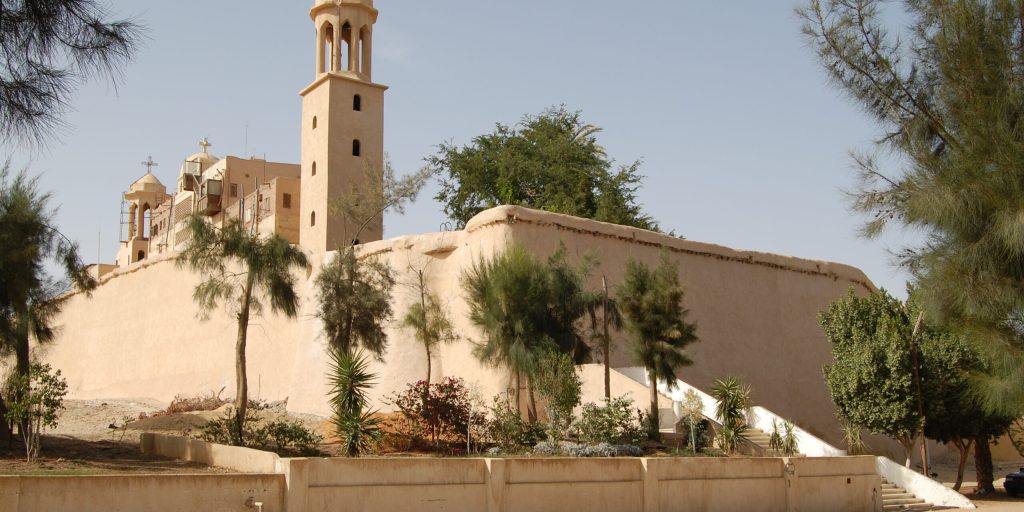
Deir al-Surian Monastery Grants Permission for Conservation and Digitisation of Coptic and Arabic Manuscript Fragments
We are excited to share the news that the Abbot of Deir al-Surian has granted permission for the conservation and digitisation of fragile Coptic and Arabic manuscript fragments preserved in the monastery’s historic library.
This initiative will ensure the long-term preservation of these irreplaceable materials while opening them up to new audiences worldwide. Through high-resolution digitisation and careful conservation, the project will:
- Stabilise and protect fragile manuscript fragments.
- Create digital copies to reduce handling of the originals.
- Facilitate the identification of each fragment’s textual and historical context.
- Support the virtual reintegration of fragments with their original codices.
- Make resources available to scholars and the wider public through knowledge-sharing platforms.
“These manuscripts are a living witness to the faith, culture, and scholarship of generations,” said Elizabeth Sobczynski, the CEO. “Through conservation and digitisation, we are ensuring that their voices continue to be heard.”
The project marks a major advance in the preservation of Coptic and Arabic Christian heritage and will contribute to international scholarship in fields ranging from theology and history to linguistics and manuscript studies. By reconnecting scattered fragments digitally, researchers will gain deeper insights into the intellectual and spiritual traditions of the region.
Further details about project partners, timelines, and access to the digital collections will be announced in due course.


New Discovery at Deir al-Surian: Ancient Syriac Folia Found in Medieval Arabic Codex
We are delighted to announce a remarkable new discovery connected with the manuscript heritage of the Deir al-Surian.
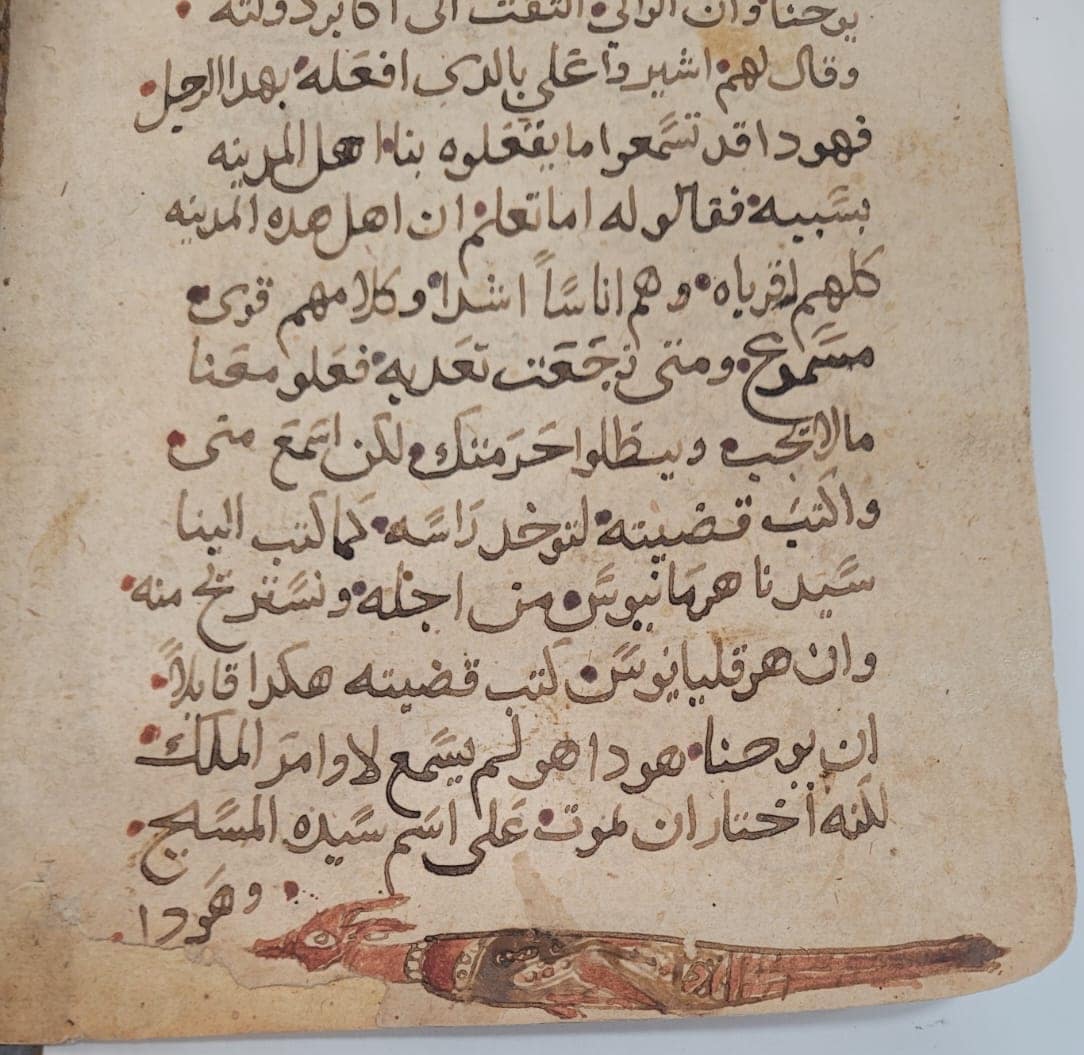
During the ongoing conservation campaign, three ancient parchment folia written in Syriac were identified inside the binding of a medieval Arabic codex. The folia had been reused as binding material and were stuck together under a thick, discoloured layer of adhesive, leaving their content illegible. Through careful conservation treatment, the sheets were separated and the adhesive removed. As the surface was gradually revealed, lines of ancient Syriac script emerged for the first time in centuries.
According to Dr. Sebastian Brock, Emeritus Reader in Syriac Studies, University of Oxford the fragments can be identified as part of the vast polemical work by Peter of Callinicus (Patriarch of Antioch, 578–591) against Damian, Patriarch of Alexandria (d. 605), edited by R. Ebied, A. van Roey and L. Wickham, book 3, ch. 3.
The complete version of this work is preserved today in the British Library, but the survival of additional folia at Deir al-Surian offers new witness to the transmission of this important 6th-century theological text.
This discovery not only enriches our understanding of Syriac literary tradition but also sheds light on the medieval practice of reusing earlier parchment leaves in codex bindings. It underscores the global significance of the Deir al-Surian library, one of the world’s greatest repositories of Syriac, Coptic and Christian Arabic manuscripts, and the continued importance of conservation and scholarly collaboration.




A three-week field campaign which begun last Friday, 15 September will focus on the conservation of codices from the Syriac, Arabic and Coptic collection.
The aim of the campaign is to continue the conservation of manuscripts from the collection, focusing specifically on six most valuable manuscripts dating from the six to the sixteenth century, to make them suitable for consultation by monks and scholars alike.
The participants include conservators, Francois Vinourd and Giovanni Pagani, director of the Recanati e Restauro specialising in Medieval book conservation. The project is being managed by Elizabeth Sobczynski, the foundation’s CEO.
Fr. Amoon, librarian, will fully participate in the campaign as an observer-trainee under the supervision of Giovanni Pagani.
The campaign is being generously sponsored by John Osborn and Nigel Pilkington, the foundation’s Chairman.
Saturday 18th March 2023
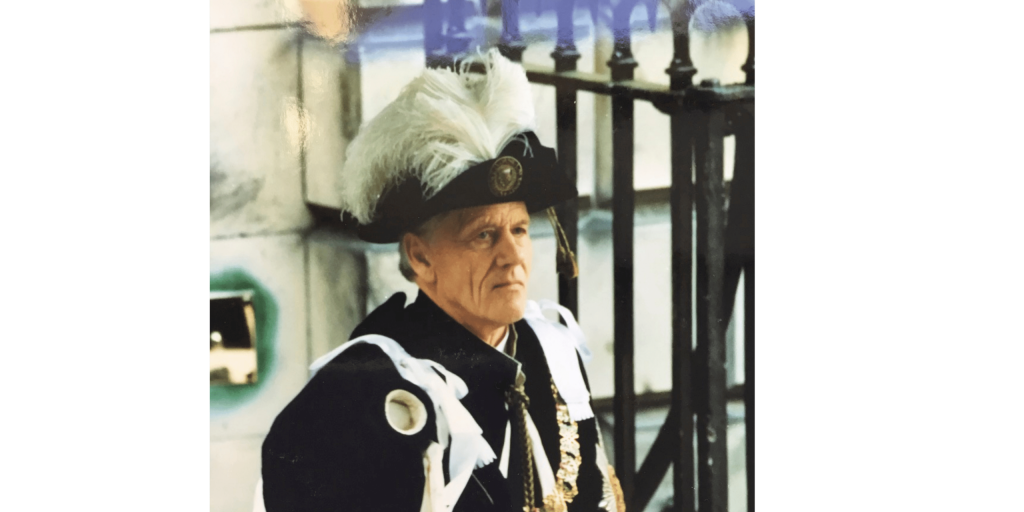
We have been deeply saddened by the death of our esteemed patron, The 29th Earl of Crawford and 12th Earl of Balcarres, Premier Earl of Scotland and head of the House of Lindsay, who has died on Saturday 18th March.
He was a unique person in every respect, a man of integrity, a great art connoisseur, a bibliophile whose hugely impressive library in Balcarres has no equal, erudite and someone who emanated knowledge and kindness onto others.
In 2002, Lord Crawford graciously agreed to become patron of The Levantine Foundation which development he followed with interest until recently. His kind letters acknowledging the progress and achievements over the years brought much encouragement to me and the Board. We are immensely grateful for that.
I have been honoured to have known him and will remember him with admiration and gratitude not only as the Foundation’s patron but also as a dear friend. He will be greatly missed.
Our thoughts are with his family in this difficult time wishing them peace and strength for the days and weeks ahead.
Elizabeth Sobczynski, CEO